The battery rebate drops on 1 January 2027. Here's what it actually costs you to wait.

If you've been circling a home battery, there's a date worth knowing about.
The federal rebate steps down on 1 January 2027. Not away — down. It keeps running until 2030, dropping every six months. But the version available right now is the best one left.
For a typical 13.5kWh battery, waiting until January costs you somewhere around $550. On a 20kWh system it's closer to $710.
That's real money. It's also not enormous, and I'd rather you knew both halves of that.
How the rebate actually works
It isn't a cheque. You never apply for anything.
The battery generates certificates — small-scale technology certificates, STCs — which your installer claims and sells. The value comes off your quote as a discount before you pay. So it should appear as a line item on the paperwork, and if it doesn't, ask why.
The number of certificates depends on the battery's usable capacity multiplied by a factor set by the government. That factor is what's changing.
Right now it's 6.8 certificates per kilowatt-hour. From 1 January it drops to 5.7. Then 5.2 from July, and down every six months until the program ends in 2030.
There's also tiering, which catches people out. You get the full rate on the first 14kWh, 60% of it from 14 to 28, 15% from 28 to 50, and nothing at all above 50kWh usable. So a very large battery earns proportionally much less than a modest one.
What that's worth in dollars
These are estimates based on the current certificate price of around $37 net. Certificates trade on a market, so the exact figure moves — confirm it on your own quote rather than taking mine as gospel.
Battery | Now | From 1 January | Difference |
10kWh | ~$2,520 | ~$2,110 | ~$410 |
13.5kWh | ~$3,400 | ~$2,850 | ~$550 |
16kWh | ~$3,830 | ~$3,210 | ~$620 |
20kWh | ~$4,430 | ~$3,720 | ~$710 |
The deadline is the install date, not the contract date
This is the bit that trips people up.
The rate is locked in by when the system is commissioned and the certificate of electrical compliance is signed — not when you sign a contract or pay a deposit. The Clean Energy Regulator was blunt about this ahead of the 1 May step-down earlier this year: systems had to be installed before the cutoff, and there were no exceptions.
The main bottleneck in the battery market isn't stock — it's the supply of accredited installers, and that can't be expanded quickly. Add distributor approval, add the fact that most installers take a break over Christmas, and add the rush that'll build as the date gets closer. In Victoria there's also an electrical safety inspection before the system can be energised, which adds time at the end.
Work back from 31 December. If you want the current rate, you want a signed contract with a confirmed 2026 install date by around late October.
What Victoria adds
Not much for batteries, and this is worth being clear about because there's a lot of stale information around.
Solar Victoria's battery rebate is gone. The interest-free battery loan closed to new applications in May 2025. For batteries in Victoria, the federal discount is the whole story.
The solar panel rebate is still there — up to $1,400, plus a matching interest-free loan. But the household income cap dropped from $210,000 to $150,000 on 1 July this year, so fewer people qualify than did last year. It also applies to replacing a system over ten years old, which is worth knowing if you've got 2010-era panels on the roof.
You can stack the two. Panels under the state rebate, battery under the federal one, same job.
Now the part I'd rather you didn't skip
If you drive an EV, a battery is a better proposition than for most households. You use more electricity, so there's more to shift off peak rates.
But charging the car directly from daytime solar is usually better value than putting that solar into a battery first. Every round trip through a battery loses ten to fifteen percent, and the battery costs thousands. If someone's home during the day, or your car sits in the driveway on weekends, or you're on a cheap overnight tariff, you're capturing most of the benefit without the hardware.
A battery earns its keep on your evening and overnight household load, and on backup if you want it. Not primarily on filling the car.
Anyone telling you that you need a battery to charge an EV from solar is selling you something.
The thing almost nobody mentions
Here's something I've now hit on four separate jobs, and customers are consistently surprised by it.
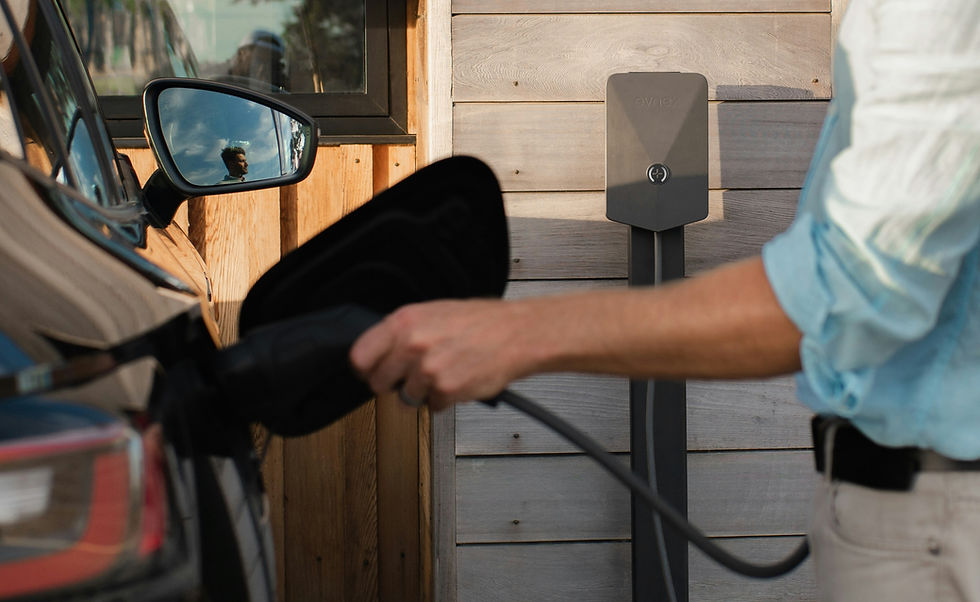
Your battery can — and often will — discharge into your car unless the system is set up to stop it.
The battery sees the charger as household load. It doesn't know a car from a kettle. So you plug in at 10pm, and the battery you carefully filled with solar quietly empties into the vehicle — and then refills from the grid at whatever the overnight rate is.
Sometimes that's fine. Often it isn't. On a wholesale plan where overnight power is cheap, taking energy out of a battery you stored at a good price to put it in a car you could fill from the grid for less makes no sense at all.
The fix is two things working together: the charger set to draw only from genuine solar surplus, and the battery configured not to support the car. Both are installer settings, and the right answer depends entirely on your tariff.
Ask about it before you sign anything. If the person quoting you looks blank, that's informative.
One more date
From 1 October this year, Victorian households can opt in to three hours of free electricity every day, 11am to 2pm. Smart meter required, and there's a fair-use cap.
For an EV owner that's genuinely useful — the state government's own numbers suggest an extra $674 a year if you shift your charging into that window. Worth setting up whether or not you buy a battery.
The catch is that rates outside the window may be higher to pay for it, so it only works if you actually shift usage.
So should you rush?
Battery prices are falling — roughly 15 to 25% a year at the moment. So while the rebate drops in January, the hardware it's discounting is getting cheaper too. A falling rebate on a falling price. The real cost of waiting is smaller than the headline number suggests. The rebate also isn't ending. It runs to 2030. Four to seven hundred dollars is worth having, but it's not worth a bad decision.
What I'd say is this. If a battery already makes sense for your house — you've got solar, decent evening usage, and a bill that hurts — then the rebate is the highest it's going to be, and booking a 2026 install is the right call. Get quotes now, sign by late October.
If you're not sure a battery makes sense yet, don't let a deadline decide it for you. Work out whether the numbers stack up first. The rebate will still be there in July, just smaller.
And whatever you do, size it to your evening usage rather than to the maximum rebate. The tiering means capacity above 14kWh earns much less, and an oversized battery is a worse mistake than a slightly smaller rebate.
Questions worth asking an installer
Are you SAA accredited, and are the battery and inverter on the approved list? No to either means no rebate at all.
What's the rebate in dollars on my quote, and at what certificate price?
What's your earliest confirmed commissioning date, in writing?
Will replacing my inverter change my export limit?
How will you stop the battery discharging into my car, and what tariff are you assuming?
Does it give me blackout backup, and what extra hardware does that need?
ChargEV installs EV chargers, not batteries — the battery work on our jobs goes to accredited installers. Everything above is general information, and sizing, distributor limits and system configuration need an accredited installer looking at your specific place.
Rebate figures move with the certificate market, so confirm them on your own quote.
If you're weighing up a charger alongside a battery and want to talk through how the two interact, give us a ring on 0419 119 988 or fill out our quote wizard - quote.chargev.au

Comments